


This week at TUNL Talks, we hosted Tsah Ben Ishay, founder of Air-flow Seat Covers, to unpack a question many South African brands ask: How do you actually test demand in international markets?
In the session we unpacked real tactics from a brand that went from selling locally to shipping hundreds of orders a month to the United States.
What made the story powerful wasn’t just the scale. It was the path to get there, including the mistakes, experiments, and lessons along the way.
If you're thinking about selling internationally (or already are), here are the biggest takeaways.
Like many good businesses, Air-flow started with a personal frustration. Tsah was riding long distances on a motorcycle when the seat discomfort became unbearable. None of the existing solutions worked across different climates or riding conditions. So he built his own.
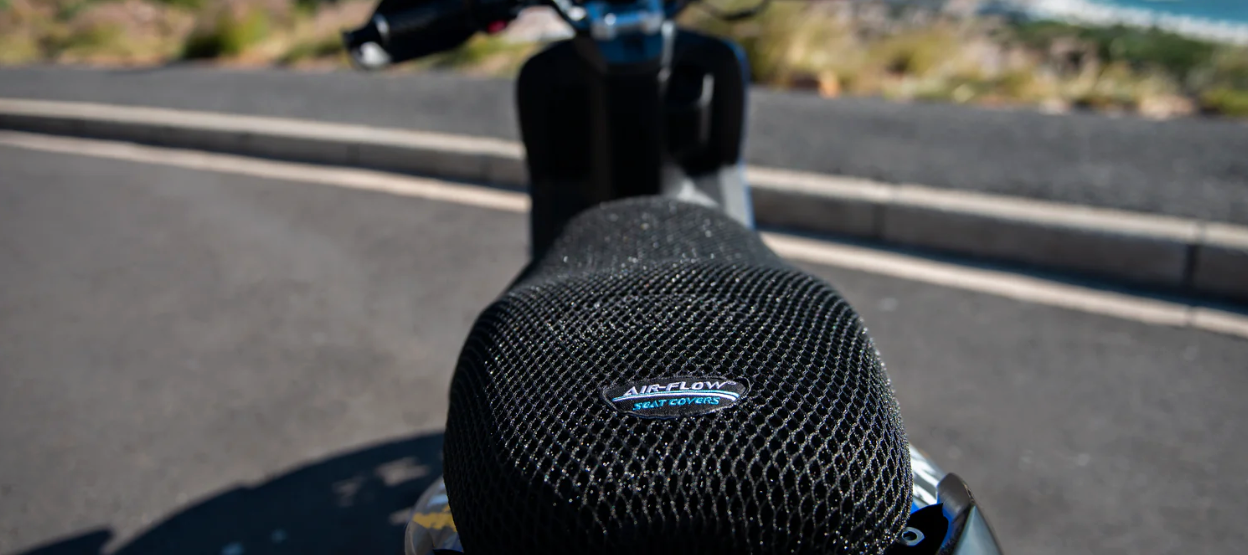
The idea was simple: A 3D mesh seat cover that creates airflow between the rider and the seat, keeping it cooler in summer, draining water in the rain, and adding cushioning on long rides.
After building a prototype, other riders started asking where they could buy one. That was the signal.
Air-flow officially launched in 2019, initially selling through motorcycle shops before eventually moving online.
Then COVID changed everything.
When retail slowed during COVID, Air-flow pivoted to selling online and running digital ads. That’s when the real breakthrough happened.
Instead of only targeting South Africa, the brand tested demand internationally, starting with the United States.
“The U.S. is a huge market. If you advertise and you have a good product, people will buy.” - Tsah, founder of Air-flow Seat Covers
Air-flow didn’t stumble into international customers. Through deliberate testing, learning, and constant iteration, they slowly built a playbook for finding and scaling global demand.
Air-flow didn’t launch big. They started with small daily Meta ad budgets to test the market. At this early stage the goal wasn’t scale just yet, instead they focused on learning and validation.
Did people click? Did they understand the product? Did they buy?
After a few days, the first sale came in. That single signal proved the market existed.
From there, the process was simple:
Eventually Air-flow reached the point where they were paying around $10 to acquire a customer for a $75 product. That’s when scaling becomes possible.
Air-flow’s product is niche. If you just look at the seat cover, it’s not immediately obvious what it does. There is a degree of customer education required.
The solution? A short video showing the problem and solution changed everything.
The team crafted a video that showed
• A rider sitting on a hot seat
• The Air-flow mesh creating space
• Water draining through the material
In seconds, the value became clear.
The lesson here is simple: If your product solves a physical or experiential problem, video is a powerful way to show people what your product does for them.
When you advertise in a massive market like the U.S., being specific beats being broad. Rather than trying to reach “everyone who rides motorcycles,” the goal was to reach the exact riders most likely to buy.
For example:
This principle applies more broadly as well. Instead of a clothing brand targeting "people interested in fashion in the U.S.," you might target women aged 25–35 who follow Pilates, shop at Lululemon, and live in coastal cities like San Diego or Miami. The more specific the audience, the easier it becomes for the algorithm and your creative to resonate with the right people.
A common mistake brands make when entering international markets is expecting instant results. Platforms like Meta and Google need time and data to optimise.
“When you start from scratch, it doesn’t have data. It takes time for the system to learn who your customers are.” - Tsah, founder of Air-flow Seat Covers
For Air-flow, the early testing period lasted several months. During that time they focused on:
• Testing creatives
• Testing audiences
• Testing pricing
• Watching conversion rates
The brands that succeed internationally are the ones willing to invest in learning before scaling.
One of the most valuable moments in the talk came from a failure. After the success of Air-flow seat covers, the team acquired another business selling premium sheepskin slippers. Naturally, the assumption was that they could repeat the same playbook: run ads, target the U.S., and scale.
They launched ads into the U.S. market and spent thousands testing demand. The result? Zero sales.
The product itself wasn’t the problem. The issue was how the product was positioned and explained. From a customer’s perspective, the slippers looked similar to cheaper alternatives already on the market, so the value wasn’t obvious.
The experience reinforced an important lesson: you can’t simply copy‑paste what worked for one product or market and expect it to work again.
Every product is different. Every customer is different. And every market perceives value in its own way.
That means international expansion requires real investment in testing and learning — understanding how your customer thinks, what problems they care about, and how your product fits into their world.
Today Air-flow runs a combination of both platforms, with a rough split of 70% Meta Ads and 30% Google Ads.
Each serves a different purpose. Meta is excellent for demand creation, product discovery and scaling quickly. Google on the other hand is powerful for high-intent searches, consistent conversions and long-term stability
Together, they create a balanced acquisition strategy.
Air-flow discovered something interesting when analysing sales data. Demand for motorcycle seat covers is highly seasonal. Sales peaked during summer riding months in the U.S., then dropped when colder weather arrived.
Instead of accepting lower sales, the team adjusted strategy. They shifted advertising toward warmer regions like Florida and Texas, and later expanded into Australia and other Southern Hemisphere markets.
The takeaway: International growth often means following seasons across the globe.
Early in Air-flow’s journey, shipping costs made international orders almost impossible. Sending a single seat cover overseas could cost more than the product itself.
That changed once the brand started shipping through TUNL’s Economy service, which made it viable to deliver products globally without destroying margins.
This shift allowed Air-flow to scale international orders sustainably, because generating demand is only half the battle. You still need to fulfil it profitably.
Today Air-Flow:
• Manufactures seat covers in Cape Town
• Ships globally
• Sells primarily into the U.S. market
• Runs a lean remote operation
And the growth continues. The team is now expanding production capacity and exploring fulfilment centres abroad to shorten delivery times and scale further.
The biggest takeaway from the conversation? International demand isn’t guesswork.It’s a process.
You test. You learn. You refine. And if the signals are there, you scale.
Want to explore international shipping for your business?
Learn how TUNL helps South African brands ship globally with simple pricing and automated workflows.

.png)
